Weekly Portfolio Review Checklist for Multi-Broker Investors
A practical weekly portfolio review checklist for investors with multiple brokers, currencies, dividends, fees, and recurring contributions to track.
Posted by
 Moses
MosesRelated reading
Broker Fee Comparison for European ETF Investors: 5 Real Scenarios
Compare broker fees for European ETF investing with 5 real scenarios, then route your decision into the live comparison tool and fee-drag calculator.
Best Way to Track an ETF Portfolio Across Brokers (2026)
Looking for the best way to track an ETF portfolio across brokers? Use a workflow that captures real returns, dividends, fees, and FX drag instead of dashboard noise.
Multi-Currency Portfolio Performance: Track FX, Fees, and Returns
A practical workflow for tracking multi-currency portfolio performance without mixing local returns, FX translation, fees, dividends, and cash flows.
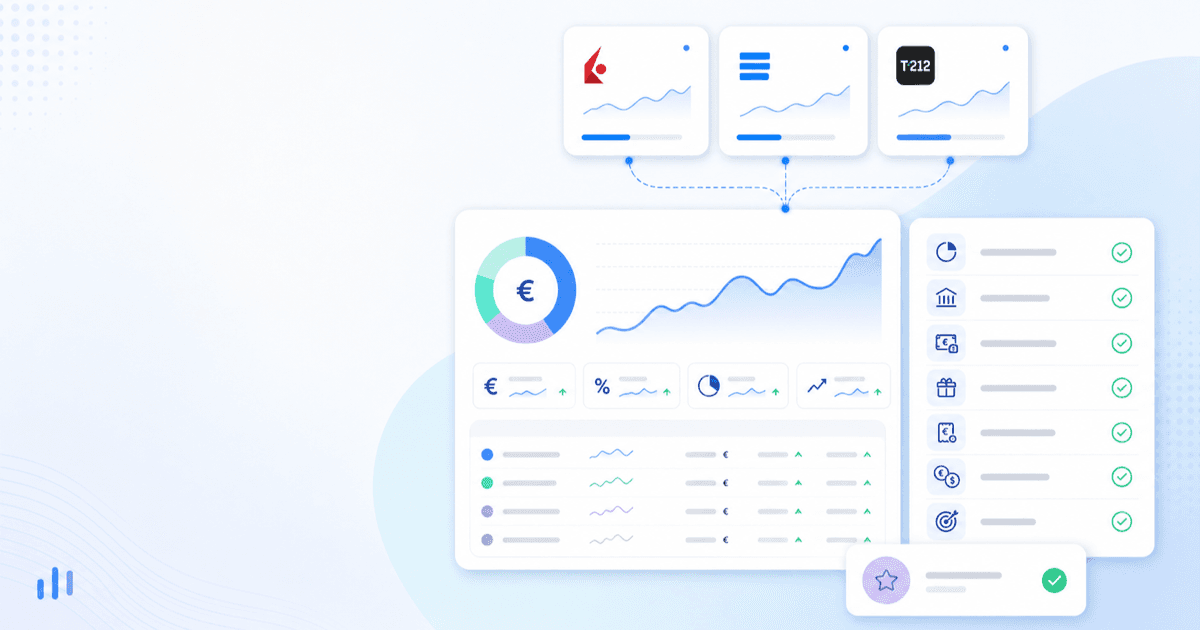
A weekly portfolio review should calm the noise, not create more of it
A useful weekly portfolio review is short, ordered, and repeatable. The goal is not to react to every market move. It is to notice whether your portfolio still makes sense after new trades, dividends, contributions, fees, FX moves, and broker-specific reporting quirks.
That matters most when your investments are split across more than one broker. Each broker dashboard can look reasonable on its own while the total portfolio hides duplicate exposure, idle cash, fee drag, missing dividends, or currency effects.
Use this checklist when you want one steady weekly review ritual for a multi-broker portfolio. It is not investment advice, and it is not a prompt to trade every week. It is a way to turn scattered account data into a cleaner operating view.
The 15-minute weekly portfolio review checklist
Start with the full portfolio before drilling into individual positions. If you begin inside one broker account, you will usually over-weight the broker that is easiest to check.
- 1. Confirm total portfolio value: review the whole portfolio in one base currency before looking at account-level numbers.
- 2. Check cash and new contributions: separate deposits, withdrawals, dividends, and FX conversions from actual investment gains.
- 3. Review allocation drift: compare your current allocation with your intended asset, sector, geography, and currency mix.
- 4. Spot concentration: identify any holding, ETF overlap, sector, or broker sleeve that has become too large for comfort.
- 5. Review top movers: ask whether the move came from market performance, currency translation, dividends, or a data issue.
- 6. Check dividends and income: confirm expected dividends arrived and that withholding tax or currency conversion did not distort the view.
- 7. Scan fees and FX costs: look for commissions, custody charges, spread costs, and explicit currency conversions.
- 8. Reconcile new trades: make sure buys, sells, and cash movements are present in the same period across every broker.
- 9. Write one action item: choose the one question to investigate next, not five portfolio changes to make immediately.
What to review first when you use multiple brokers
Multi-broker investors should review account-level numbers only after the total portfolio view is clear. The first question is not whether DEGIRO, IBKR, Trading 212, or another broker had a good week. The first question is whether the full portfolio is still aligned with the job it is meant to do.
A simple order works well: total value, cash flows, allocation, concentration, performance, income, fees, then data quality. That order prevents a single strong or weak holding from hijacking the review before you have checked whether the portfolio data is complete.
If the hard part is getting all broker data into one view, start with our multi-broker portfolio tracking workflow. If you need to check whether a broker can connect or import cleanly, use the supported broker directory as the compatibility owner.
Weekly review template for fees, dividends, and FX
The most useful weekly review separates market movement from everything else. Fees, dividends, taxes, deposits, withdrawals, and currency translation can all change the account value without saying much about whether the investments themselves performed well.
- Market movement: which holdings drove gains or losses in their local currency?
- Currency movement: did base-currency performance differ from local performance?
- Income: which dividends arrived, and were they net or gross of withholding tax?
- Costs: which broker fees, commissions, spreads, or FX conversions appeared this week?
- Cash flows: which deposits and withdrawals should be excluded from performance interpretation?
For the return-method layer, pair this checklist with our TWR vs IRR guide for retail investors. For currency-specific review mistakes, use the multi-currency portfolio performance workflow. If fees look like the likely drag, run the setup through the hidden investment fees calculator.
When to use weekly, monthly, and quarterly reviews
Weekly reviews are for monitoring data quality, cash flows, new information, and obvious drift. Monthly reviews are better for performance interpretation because they reduce noise. Quarterly reviews are where deeper allocation, broker choice, and fee decisions usually belong.
- Weekly: reconcile new trades, dividends, cash, fees, top movers, and one action item.
- Monthly: review returns, allocation drift, dividend yield, contribution timing, and fee drag.
- Quarterly: decide whether the portfolio structure, broker mix, rebalancing plan, or tracking workflow needs a change.
This cadence keeps the weekly habit useful without turning it into a weekly trading ritual. The most valuable outcome is often a better question, not an immediate transaction.
How trackyourportfol.io supports this review workflow
trackyourportfol.io is built for investors who need one operating view across broker accounts. You can import broker CSVs with AI-assisted parsing for 50+ broker formats, connect and sync supported brokers through SnapTrade, edit transactions manually when needed, and review consolidated holdings, allocation, yearly returns, dividends, fees, and broker-level views in one place.
For subscribed users with active individual-stock holdings, Weekly Insights and Deep Dive reports can add a structured research layer: portfolio summary, holding-level analysis, risks, opportunities, headlines, and upcoming events. That should sit on top of clean portfolio data, not replace the review discipline.
If you want to see the end state before importing anything, open the portfolio preview. If the main issue is still choosing or evaluating a tracking tool, use our best portfolio tracker for Europe comparison.
A one-page weekly portfolio review note
End the review by writing a short note. It should be boring and useful. If the note is too long, the weekly habit will not survive.
- Portfolio value and base currency used this week.
- New deposits, withdrawals, dividends, fees, and FX conversions.
- Largest allocation, concentration, or cash-flow change.
- One data issue to fix before the next review.
- One decision to defer to the monthly or quarterly review.
A good weekly review does not need to predict the market. It needs to keep your portfolio facts organized enough that better decisions are possible when they actually matter.